An open-source Claude Code plugin by yukurash
Have 16 minds argue over your decision before you make it.
16 Minds is an open-source Claude Code plugin by yukurash, who built it because asking Claude for a review tends to return one balanced, averaged answer. It hands your question to agents modeled on 16 personality types, each with its own values, habits of thought and tone, and shows you where they split. Two lines install it in Claude Code.
This is free to use. What we sell is at the bottom of the page, with prices.
- 01Install the plugin from yukurash's GitHub with two lines
- 02Ask one type, set two against each other, or run all 16
- 03Read where they split, then choose how to land the decision
- Personality types, one prompt each
- 16
- To install in Claude Code
- 2 lines
- Commands, from one voice to all 16
- 4
- License, from yukurash on GitHub
- MIT
What you will have when you finish
A panel you can call from Claude Code before a decision, with the disagreements laid out for you to read.
- 16 Minds installed in Claude Code, with four commands: /mind, /pair, /minds and /cast
- One type's opinion on any topic, in that type's own values and tone
- A debate between two types, or one type against a rival the plugin picks for you
- All 16 types on one question, then a synthesis: the spread of scores, the main splits, the points the others tend to miss, and two or three ways to land it
- Four skills that write, decide, vote and ask you questions in a chosen type's voice
Eight steps, the last one optional
Two lines install the plugin. The next four steps go from one voice to all 16, then the modes, then the optional skills. Every command and flag below comes from the plugin's README and command files.
Claude Code. 16 Minds is a plugin for it and installs from inside a Claude Code session with the /plugin command.
- 01
Add yukurash's marketplace to Claude Code. A marketplace is where Claude Code looks up plugins, and this one is the plugin's own GitHub repository.
16 Minds on GitHub, by yukurashSend in Claude Code
/plugin marketplace add yukurash/16minds-plugin
Your part: send the line and approve anything Claude Code asks. The README on GitHub is in Japanese, with an English version linked at the top.
- 02
Install the plugin from that marketplace. This is the second of the two install lines in the plugin's README.
Send in Claude Code, as its own message
/plugin install 16-minds
Your part: send it after the first line has finished. The long form names the marketplace, which the plugin's manifest calls 16-minds-marketplace: /plugin install 16-minds@16-minds-marketplace.
- 03
Ask one type. /mind gives you a single type's opinion on your topic. Name the type by its four letters in lowercase, then write the topic in plain words.
/mind intj Will this API design hold up long-term?Your part: pick a type. The 16 are intj, intp, entj, entp, infj, infp, enfj, enfp, istj, isfj, estj, esfj, istp, isfp, estp and esfp. In light mode the answer is four lines: a score from 1 to 5, a stance, the value that weighed most and the main concern.
- 04
Make two types debate. /pair gives each type an opening, then a rebuttal, then a reply or a landing, depending on the mode. Put --rival after one type and the plugin picks the opponent.
/pair istj entp Split the monolith or keep it
/pair intj --rival Can this API design ship as it is?
Your part: name two different types, or one type and --rival. The rival comes from two effects that held up in the author's tests: how much the opponent adds to a debate, and how many of the four letters differ.
- 05
Run the whole panel. /minds gives your topic to all 16 types at once, then writes a synthesis in four fixed parts: the spread of scores, two or three main splits with the types on each side, one to three points the others tend to miss, and two or three ways to land the decision.
/minds Change jobs or wait for promotion at the current company
/minds --types=intj,entj,istp Which DB to adopt next
Your part: watch the token use. /minds can start up to 16 subagents at once, so it uses more tokens than /mind. Light mode saves tokens, because each type answers with a score and a one-line comment. --types limits who joins, and --save writes the full run to a file in an Outputs folder.
- 06
Let the plugin choose the panel. /cast sorts your topic into one of eight kinds of work and calls only the types the author's measurements favor for it, four by default.
/cast Will I still understand this name in six months?
/cast --n=6 --show Should we stay with one file?
Your part: add --show to see why each type was picked. The eight kinds are engineering work: a bug, a missing spec, a design review, naming, an estimate, an incident, a refactor and a tech choice. For the widest coverage, the author says to call everyone with /minds.
- 07
Pick a depth for any command. All four commands take --mode, and middle is the default.
--mode=light    a score and a one-line comment
--mode=middle   a light pass, the split opinions in depth, a synthesis
--mode=heavy    adds a rebuttal round and a deeper synthesis
Your part: start light to see the spread with fewer tokens, then go heavy on a decision that matters. The README suggests heavy for weighty decisions and for article material.
- 08
Optional: put a type to work. Four skills use the same personalities to act instead of discuss. voice-write writes in a type's voice or rewrites AI-generated text. voice-decide picks one option with no fence-sitting. voice-vote has a group of types vote yes, no or abstain and says whether it passes. voice-ask has a type ask you sharp questions and answer none.
/voice-write enfp Tips for getting an article read
/voice-vote Cut standups to once a week --types=entj,istj,entp,esfj,intp
/voice-ask entp I want to monetize my side project next year
Your part: plain requests work too, such as "Decide as ENTJ" or "Rewrite this as ENFP" followed by your text. Both forms come from the README.
Commands, flags and examples were checked against the plugin's README, in Japanese and English, and its command files on GitHub on 16 October 2026.
The specifics
From the plugin's README and its author's published test, read 16 October 2026.
- Good for
- Ideas, design decisions, code review, life and career choices, and ethical questions, per the README. Anything where opinions are likely to split.
- Made by
- yukurash, on GitHub, under the MIT license. Claude Code does not include it, and neither Anthropic nor GraniteAI made it.
- What the type changes
- Priorities and writing. In the author's test, all 16 types found nearly the same share of planted defects: 0.62 to 0.74.
- Token cost
- /minds can start up to 16 subagents at once and uses more tokens. Light mode, --types or /cast keeps a run smaller.
- Trademarks
- 16 Minds has no affiliation with The Myers & Briggs Foundation, holder of the MBTI® trademark, or NERIS Analytics (16Personalities®), and neither one endorsed or authorized it. GraniteAI has no tie to either.
- Checked against
- The plugin's README in Japanese and English and its command files on GitHub, read 16 October 2026.
Questions people ask
Will it find more bugs in my code?
Do not count on it. In the author's own test, all 16 types found nearly the same share of planted defects, 0.62 to 0.74. The type changed what got flagged first and how the review read. For coverage, the author suggests /minds with everyone.
Do I have to believe in MBTI for this to work?
No. The plugin refers to the 16 types as a general psychological typology. Each type gives one agent its own values, habits of thought and tone, and you read where the agents disagree.
Will running all 16 eat my Claude usage?
It uses more than one type does. /minds can start up to 16 subagents at once. Light mode keeps each answer to a score and a one-line comment, --types limits who joins, and /cast calls four types by default.
Stuck on a step? Ask me.
This guide is also a lesson in my community, with its own questions thread for the step that stopped you. Joining is free. Paid members also get my ask me anything call every Tuesday at noon ET, and the full recordings of each setup as I make them.
The free tools people open most
See every free toolSkill and prompts for Claude Code
Dynamic workflows kit
Claude Code · 5 min of your time
Download the kit


That was the free part
The tool is yours. Nothing above asked for an email.
If it earned a minute of your time, the paid part is one scroll down.
The paid part
Here is what we sell.
Everything above this line is free and stays free. Below it is what we sell. The prices are the prices, and the two subscriptions carry 30 days money back on the first month.
Mica Social Media Analyzer
Price: $29/ month
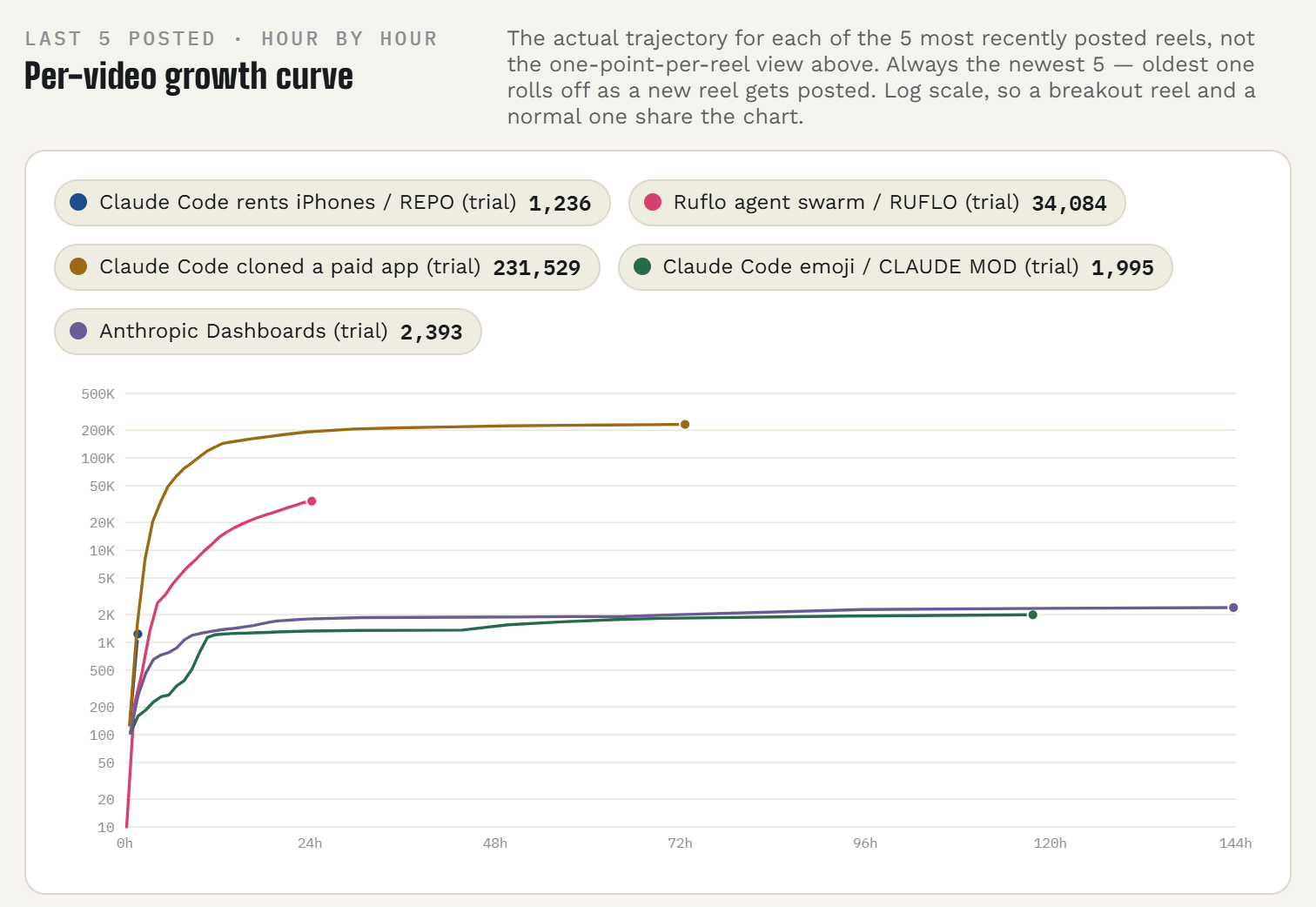
Your Instagram, answered by the ChatGPT or Claude you already use. Connect the account once, then ask in plain words what worked and what to post next.
You post on Instagram and you are done guessing from the Insights tab.
- Which Reels held attention, ranked, without opening Insights
- Readings at 1, 24 and 72 hours after every post, so you see what happened while it was moving
- Next captions written in the style of your most saved posts
- Read only. It never posts or changes anything
7 days free with a card on file. About a dollar a day after that.
30 days money back on the first month. Email guru@graniteai.co and we refund it.

Mica Social
Price: $49/ month
An AI that writes, designs, checks and publishes a post to your Facebook and Instagram every day. You send a photo when you have one. It does the rest.
You know the feed should be alive every day and it is not.
- A finished post every day, with a photo made for it. Nothing to shoot
- Timed to your local weather, season and county numbers
- Five checks before anything publishes. No approvals, no calendar, no logins
- Every photo you send becomes its own extra post
An agency running a daily feed bills $500 to $1,500 a month. 3 days free with a card on file.
30 days money back on the first month. Email guru@graniteai.co and we refund it.
The readiness audit, done for you
Price: $349One week
Send us access to your repo. We run the nine-lane review, change nothing, and hand back the report with a 30 minute call on the three gaps to close first.
You have a product you charge for, or want to, and you would rather read the verdict than run the agents.
- The report at docs/commercial-readiness.md: a verdict, a scorecard, every gap with the file to open and how to verify it
- Legal, security, billing, support, marketing, operations and the rest, checked at once
- A 30 minute call on the three gaps to close first
- Nothing in your repo changed. The workflow prompt is yours to run afterward
The review is the one in the video. On our own product it found 87 gaps. The overnight run that followed was 148 commits and one pull request.
If the review finds no gap worth your time, you pay nothing.
The guided first run
Price: $9960 minutes
We run the review on your repo together, on a call, and you leave with the report in your repo and the three gaps to close first.
You have the kit and a repo, and you would rather do the first run with someone who has done it.
- The review running on your machine, in your Claude Code
- The verdict read together, and the three gaps picked
- The workflow prompt set up so you can run it that night
- The call recording
New. You would be one of the first. The run itself is the one in the video: 190 agents, 148 commits, one pull request.
If the review will not run on your setup during the call, there is no charge.
GraniteAI builds and runs AI systems for small and midsized businesses, out of Manchester, New Hampshire.