Free skill for ChatGPT and Claude

Technical English that any reader can follow.

A maintenance runbook reads as a wall of clauses. A shift operator on the floor, in gloves, after a fault alarm, does not have time to untangle them. STE is one free file you add to ChatGPT or Claude. From then on, "write the daily 5-minute check" comes back as one idea per sentence. "Draft the work instruction for the filter change" comes back with the condition before the step, in active voice. Any reader can run it.

Download STE

Three plain-text files. Free, no signup, works in ChatGPT and Claude.

The same runbook, written twice.

Two copies of the same AI got the same brief for a fictional brewery in Manchester, NH. The request: write the operator-facing maintenance procedure. One had STE. Both procedures are below, whole and unedited.

Without STE

Kettle Brook Brewery

Operator maintenance procedure

Kettle Brook Brewery: Air Compressor Maintenance Procedure

Plant: Kettle Brook Brewery, Manchester, NH. Equipment: 30 hp rotary-screw compressor, packaged unit, indoor install. Audience: shift operator on the floor, often in gloves, often called to the unit after a fault alarm. Owner intent: a procedure a stranger can run from the page, in order, without a phone call.

Scope: daily 5-minute check, weekly 30-minute check, annual 4-hour service. Tools: torque wrench, filter element kit, oil sample bottle, infrared thermometer, megger. The procedure assumes a single qualified operator and one unit off-line for the relevant block.

Note on this draft: this is the no-skill baseline. The operator-facing copy below was produced in one pass by an agent that had no STE guidance. Read the runbook against the next pane, where the same brief was given to an agent that had the STE rulebook loaded first.

A procedure is not a memo. The version on the left reads like a memo, with conditions buried after verbs, nominalizations where verbs should be, and sentences that try to carry two instructions at once. A procedure a stranger can run has the condition up front, the verb in the middle, and the stop condition on its own line.

DAILY 5-MINUTE CHECK

Before start: confirm the unit is in automatic and the discharge pressure reads between 100 and 115 psi on the local gauge.

Open the service panel. Perform a visual examination of the air-oil separator, looking for oil staining on the housing or wet residue around the seal.

Check the inlet filter. If the filter element is discolored, replace it. If it is clean, leave it.

Listen to the unit under load. An examination of the running sound for rattle, knock, or high-frequency whine should be performed. Any of the three is a stop condition.

Read the controller display. Note any active fault code and the run hours. The operator should make an entry of these in the daily log.

Confirm the coolant temperature on the discharge line is below 195 F with an IR thermometer. The reading has been performed above 200 F; shut down and tag out.

Sign the daily log. Hand off to the next shift.

WEEKLY 30-MINUTE CHECK

Lock out, tag out. Open the service panel. Carry out an examination of the belt tension with the belt gauge; deflection at mid-span should be 10 to 12 mm under moderate finger pressure.

Drain the condensate from the receiver tank into the approved container. The container is to be labeled and dated before being moved to the waste oil drum.

Carry out a check on the oil level via the sight glass. The level should be in the upper third of the glass when the unit is running and warm.

Pull a 50 ml oil sample from the sample port into the labeled bottle. Submit the sample to the lab with the run hours written on the label.

Wipe down the cooling fins on the aftercooler with the soft brush, working top to bottom. Compressed air at 30 psi may be used to blow out debris.

Fire up the compressor and observe the no-load running current on the panel meter. The reading should be within 5 percent of the value on the nameplate.

Sign the weekly log.

ANNUAL 4-HOUR SERVICE

Lock out, tag out, and post the maintenance sign at the disconnect. Confirm zero energy with the megger at the input lugs before opening any enclosure.

The technician has completed the inspection of the air-oil separator element, and the element is to be replaced if the differential pressure across the element is greater than 5 psi at full load, or at 8000 run hours, whichever comes first.

Replace the inlet filter element. Replace the oil filter element. Replace the fluid. Use the OEM fluid grade listed on the nameplate. Fill to the upper third of the sight glass with the unit off.

Inspect the inlet valve actuator for staining around the seal and replace the seal kit if staining is present. Inspect the blowdown valve for seat wear and replace if pitting is visible.

Inspect all electrical terminations at the disconnect and the motor junction box. Tighten to the torque values on the cabinet drawing with the torque wrench. Any connection found loose is to be re-torqued and the value recorded on the inspection sheet.

Run the unit under no load for 10 minutes, then under load for 30 minutes. Record the full-load amps, the discharge pressure, the discharge temperature, and the controller fault log at the end of the run. File the recording in the maintenance binder for the unit.

Sign the annual service record. Remove the lock and tag. Return the unit to service.

GENERAL SAFETY

Lock out, tag out is required for any work past the daily check. The unit is to be confirmed at zero energy before any enclosure is opened. PPE is safety glasses, hearing protection, and gloves. The annual service is to be performed by a qualified technician; the daily and weekly checks may be performed by a trained operator.

End of no-skill runbook.

With STE

Kettle Brook Brewery

Operator maintenance procedure

Kettle Brook Brewery: Air Compressor Procedure

Plant: Kettle Brook Brewery, Manchester, NH. Equipment: 30 hp rotary-screw compressor, packaged unit, indoor install. Reader: shift operator on the floor, often in gloves, often called to the unit after a fault alarm. Intent: a procedure a stranger can run from the page, in order, without a phone call.

Scope: daily 5-minute check, weekly 30-minute check, annual 4-hour service. Tools: torque wrench, filter element kit, oil sample bottle, infrared thermometer, megger. The procedure assumes one qualified operator and one unit off-line for the relevant block.

Safety note. Lock out and tag out is required for any work past the daily check. Confirm zero energy before you open any enclosure. PPE: safety glasses, hearing protection, gloves.

DAILY 5-MINUTE CHECK

Confirm the unit is in automatic. Read the discharge pressure on the local gauge. The reading must be between 100 and 115 psi.

Open the service panel. Look at the air-oil separator. Stop and call a technician if you see oil staining or wet residue.

Look at the inlet filter. Replace the element if it is discolored. Leave it if it is clean.

Listen to the unit under load. Stop the unit if you hear rattle, knock, or high-frequency whine.

Read the controller display. Write the active fault code and the run hours in the daily log.

Measure the coolant temperature on the discharge line with the IR thermometer. Shut down and tag out if the reading is above 200 F. The reading is acceptable up to 195 F.

Sign the daily log. Hand off to the next shift.

WEEKLY 30-MINUTE CHECK

Lock out and tag out. Open the service panel. Measure the belt deflection at mid-span with the belt gauge. The deflection must be 10 to 12 mm under moderate finger pressure.

Drain the condensate from the receiver tank into the approved container. Label and date the container before you move it to the waste oil drum.

Read the oil level at the sight glass. The level must sit in the upper third of the glass when the unit is running and warm.

Draw a 50 ml oil sample from the sample port into the labeled bottle. Write the run hours on the label. Send the sample to the lab.

Brush the cooling fins on the aftercooler from top to bottom with the soft brush. You may use compressed air at 30 psi to blow out debris.

Start the compressor. Read the no-load running current on the panel meter. The reading must be within 5 percent of the nameplate value.

Sign the weekly log.

ANNUAL 4-HOUR SERVICE

Lock out and tag out. Post the maintenance sign at the disconnect. Confirm zero energy at the input lugs with the megger before you open any enclosure.

Inspect the air-oil separator element. Replace the element when the differential pressure across the element exceeds 5 psi at full load, or at 8000 run hours, whichever comes first.

Replace the inlet filter element. Replace the oil filter element. Replace the fluid. Use the OEM fluid grade listed on the nameplate. Fill the unit to the upper third of the sight glass with the unit off.

Inspect the inlet valve actuator for seal staining. Replace the seal kit if staining is present. Inspect the blowdown valve seat for pitting. Replace the valve if pitting is visible.

Inspect the electrical terminations at the disconnect and the motor junction box. Tighten each connection to the torque value on the cabinet drawing with the torque wrench. Re-torque any loose connection and record the value on the inspection sheet.

Run the unit under no load for 10 minutes, then under load for 30 minutes. Record the full-load amps, the discharge pressure, the discharge temperature, and the controller fault log at the end of the run. File the recording in the maintenance binder for the unit.

Sign the annual service record. Remove the lock and tag. Return the unit to service.

End of with-skill runbook.

Same model on both sides, the same brief, the same procedure, one pass each. The agent without the skill opened the brief and wrote the runbook. The agent with it read STE100 first, wrote, and checked its own draft against the rule list before saving. Neither got help from anywhere else.Kettle Brook Brewery is a fictional plant invented for this test, so no real customer data appears on either side. Read the daily check first: one side says "perform a visual examination" and "fire up the compressor." The other says "look" and "start." Then read the annual service.

When to use this

Reach for it when a procedure has to run on a shop floor, in the field, or across a language line. The reader cannot ask you a follow-up question. It works from whatever is real: a piece of equipment, a fault code, a maintenance interval, a safety warning. The day job is the writing that keeps a person safe and a machine running.

Use it for

Safety warnings and work instructions
The condition sits before the step, the step uses one verb, and the stop condition is its own sentence. A reader in gloves runs it without a phone call.
Maintenance procedures and runbooks
Daily, weekly, and annual checks read as a sequence a stranger can carry out in order. The two procedures above are this exact job.
Error messages and tool descriptions
The reader knows what failed, what to do next, and when to stop. No marketing prose, no nominalizations, no second clause that buries the first.
Agent-facing tool text
The text an agent shows a user is the user's procedure. STE keeps it short, active, and verifiable, so the agent does not invent a step the source never said.
Anything a non-native reader or a translation tool will read
Short sentences and common words survive translation and survive a second-language reader. STE is the controlled-language standard aerospace and defence use for this reason.
Anything that crosses a language or team boundary
A procedure that goes from the engineering team to the floor, from the OEM to the customer, or from the US site to the EU site reads the same in every hand.

Not for

Marketing copy
Use /skill:copywriting. STE strips the voice the buyer reads for.
Fiction and story
Use /skill:the-writer. STE forbids the rhythm and texture a story needs.
Reference docs a reader will search
If the page exists to be queried, write it for the query. A runbook buries the line the reader came for.

How to use this

Install once. Then ask in plain words.

"Write the daily check for the air compressor, using STE." "Rewrite this work instruction so a non-native reader can follow it." "Make this error message one idea per sentence." That is the whole workflow.

ChatGPT

Skills are live on Business, Enterprise, Edu and Healthcare plans; an admin may need to switch them on. On Plus or Free, use a project instead: paste the guide into its instructions and add the two example files. Same result.

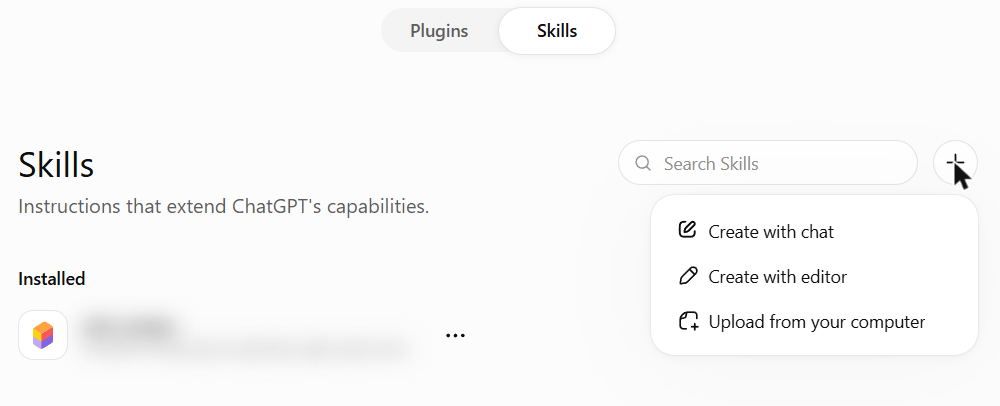
  1. 01

    Open the Skills page: pick Plugins in the sidebar and switch to the Skills tab, or go straight to chatgpt.com/skills.

    Plugins → Skills
  2. 02

    Click the plus button, then upload from your computer.

    + → Upload from your computerThe ChatGPT Skills page with the add menu open: Create with chat, Create with editor, and Upload from your computer.
  3. 03

    Select ste100-skill.zip exactly as downloaded.

    ChatGPT expects a zip holding one folder with SKILL.md inside. That is exactly what the download is.

  4. 04

    Ask for the procedure in any chat.

Claude (web or desktop)

Works on Free, Pro, Max, Team and Enterprise plans.

  1. 01

    In settings, open Capabilities and check that cloud code execution is on. Skills need it.

    Settings → Capabilities → Cloud code execution and file creationThe Claude capabilities setting named Cloud code execution and file creation, switched on. Its description ends: Required for skills.
  2. 02

    In the sidebar, click Customize. It opens on your Skills list.

    Customize → Skills
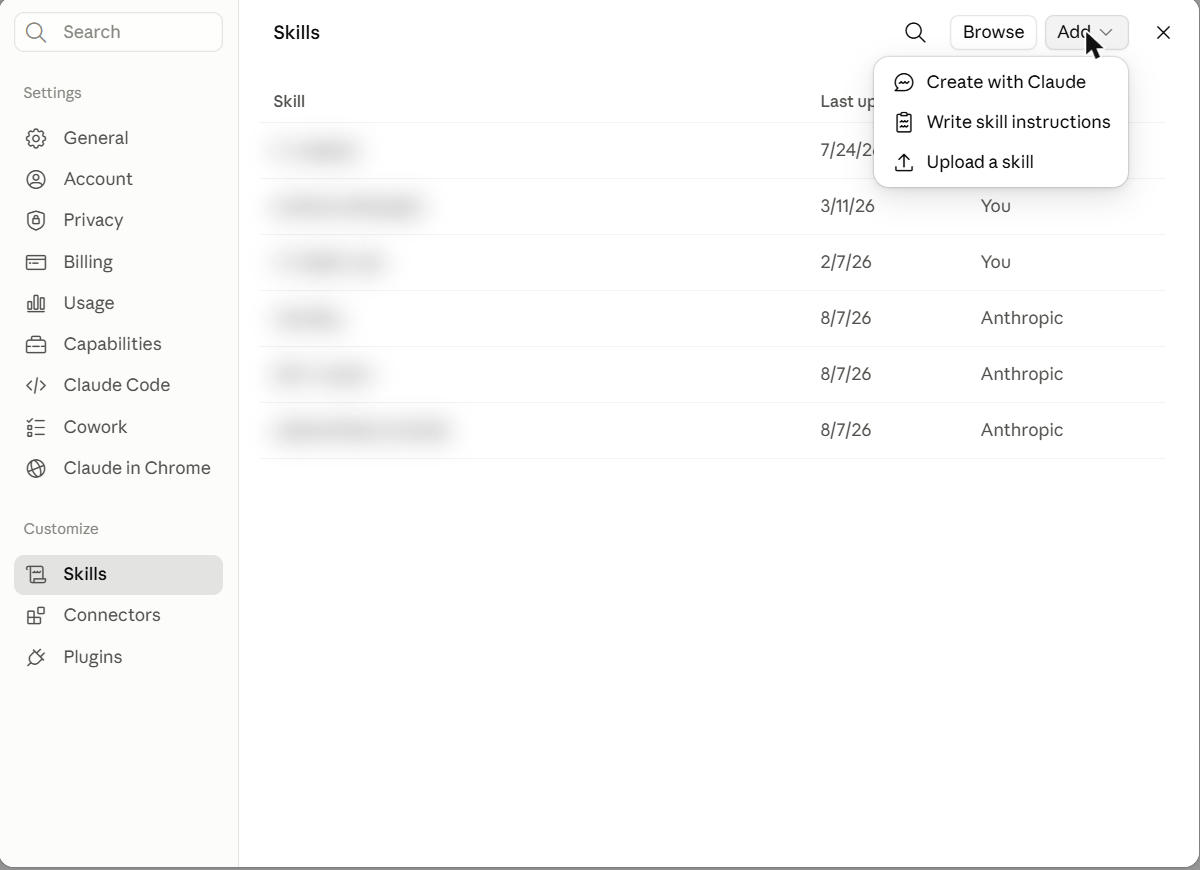
  3. 03

    Click Add, then Upload a skill.

    Add → Upload a skillThe Claude Skills page with the Add menu open: Create with Claude, Write skill instructions, and Upload a skill.
  4. 04

    Select ste100-skill.zip.

    Upload the zip exactly as downloaded. Do not unzip it first.

  5. 05

    Start a new chat and ask for the procedure.

On Claude Code? Unzip the download into your skills folder (~/.claude/skills) and it loads on the spot.

We use this on our own procedures.

Maintenance runbooks, work instructions, and the error messages behind our own tools all go through it. The guide got sharp because the procedure had to survive an owner who quits reading at the first buried clause. Take it, run it on your next draft, and cut whatever does not fit.

Who made this

GraniteAI builds and runs AI for small and midsized businesses, out of Manchester, New Hampshire. Follow-ups that stop slipping, a feed that stays alive, and a ChatGPT that knows the market a business actually works in. That last one is the Mica Intelligence Engine: an owner asks what to charge or which town to work next, and the answer arrives backed by verified facts about their own county and trade, each carrying a source and a date. See the engine

The next free file

STE settles how the procedure reads. What goes in it still has to come from the business and the equipment, and the AI you ask does not have those facts. Send us your website and the equipment list. We email back a context kit that makes ChatGPT or Claude answer from your business instead of guessing about it. Free, and every file is yours to read before you load it.

When a local trades company runs a feed of its own work, the daily post slips to every other Tuesday. Mica takes that end of the job for trades like cleaning and roofing. It drafts and publishes on a steady schedule, so the page and the feed stay alive through the months nobody has an hour to sit down and write. See Mica